

 Maize Field - Credit: Cathy, Sam, Max and Mai
The plant consists of a leafy stalk that produces ears with seeds called kernels. Though technically a grain, many people consider corn to be a vegetable.

 Corn Kernels - Credit: Andrew Butko
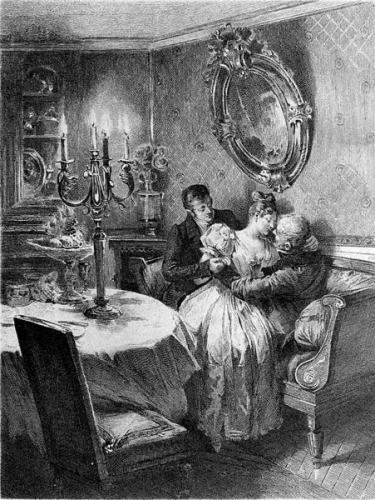
Le Père Goriot (1835) by Honoré de Balzac is set in Paris in 1819.
The novel follows three characters: a suspicious criminal named Vautrin; the elderly doting Goriot; and a law student named Eugène de Rastignac. Throughout the novel, Balzac analyzes the fundamentals of family and marriage at a critical time in French history.
When released, the book generated widespread controversy.
 Pyrrhocorax pyrrhocorax - Credit: polandeze, Flickr
The bird is actually a red-billed chough, a member of the crow family.
Known for its long, bright red bill, Pyrrhocorax pyrrhocorax is found in mountainous areas around the British Isles, the Mediterranean, the Alps, as well as further east in China and India.
Jean Christophe is a French fictional biography on Beethoven by Nobel Prize winner Romain Rolland (1866-1944). It consists of 10 volumes:
- L'Aube ("Dawn", 1904)
- Le Matin ("Morning", 1904)
- L'Adolescent ("Youth", 1904)
- La Révolte ("Revolt", 1905)
- La Foire sur la place ("The Marketplace", 1908)
- Antoinette (1908)
- Dans la maison ("The House", 1908)
- Les Amies ("Love and Friendship", 1910)
- Le Buisson ardent ("The Burning Bush", 1911)
- La Nouvelle Journée ("The New Dawn", 1912)
Volumes 1-4 are grouped as Jean-Christophe, 5-7 as Jean-Christophe à Paris, and 8-10 as La fin du voyage. The main character, Jean-Christophe Krafft, is a German composer of Belgian descent.

 Herman Melville - Credit: Joseph O. Eaton
Herman Melville (1819–1891) was an American short story writer, poet, and essayist. His most renowned work is Moby Dick.
After his death his work was almost forgotten, and it was not until 25 years later, during the “Melville Revival”, that his work came to be appreciated fully.

Eugénie Grandet is a novel by Honoré de Balzac written in 1833.
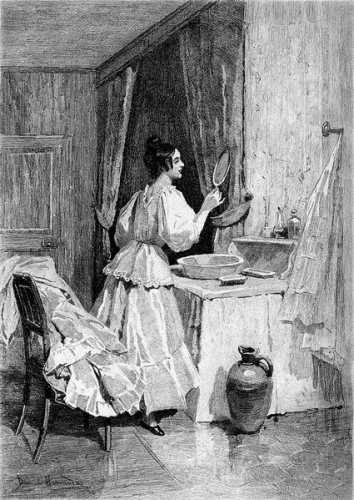
The book takes place in Saumur, France, and is about the miserliness of a young girl and the family troubles that attend her when her father kills himself and her uncle decides to send his nephew overseas to make his fortune.
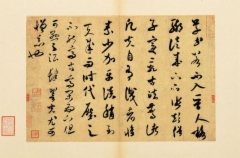
Calligraphy is an ancient art form, particularly celebrated in China. Artists use special writing tools and inks to render the alphabet beautiful.
Chinese calligraphy uses the exotic characters of the language to express powerful feelings.
An extreme or irrational fear of heights is known as Acrophobia, and is one of the most widespread phobias. It is more common in women.
Acrophobia may be attributed to a traumatic experience in a person’s life, but is most commonly experienced as an inborn condition.
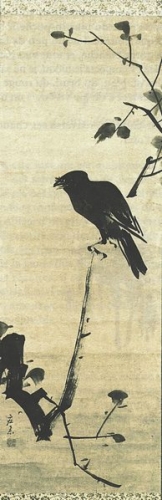
In Chinese mythology, the world originally had ten suns embodied as ten crows, which rose in the sky one at a time according to a strict rota. When all ten decided to rise at once for a change, the effect was devastating: crops were scorched and the earth laid waste. So the gods sent their greatest archer, Houyi, who shot down nine of the crows, leaving only one to light the world.
Throughout Chinese culture, crows have a negative connotation.
A dental drill is a small, high-speed drill used to remove decay or shape tooth structure before insertion of a filling or crown. A dental drill may also be used to clean and shape root canals, or to remove old or temporary fillings or crowns.

A dental drill consists of a "dental handpiece" and a power source, the "dental engine".
 Marseille - Credit: J. Elliott
Marseille is the second largest city in France after Paris, with a population of 850,000. It is located on the southeast coast of France, and is the country's largest commercial port. Marseille is the capital of Provence-Alpes-Cote d’Azur district, as well as the capital of the Bouches-du-Rhonoe district.

 Alexandre Dumas - Credit: Gaspard-Félix Tournachon
The Count of Monte Cristo is an adventure novel written by Alexandre Dumas. It is considered to be one of his most popular work, along with The Three Musketeers. The novel was written in 1844. Like many of his novels, it is expanded from plot outlines suggested by his collaborating ghostwriter Auguste Maquet.
The Count of Monte Cristo is primarily concerned with themes of hope, justice, vengance, mercy, and forgiveness. It is the story of a man wrongfully imprisoned, who escapes from jail, acquires a fortune, and sets about taking revenge on those responsible for his imprisonment. His vengeance brings devastation to both innocent and guilty.
 jesus - Credit: Stained glass: Alfred Handel, d. 1946[2], photo:Toby Hudson
Jesus of Nazareth, commonly referred to as Jesus Christ, is the central figure of Christianity and is regarded as an important prophet in Islam. Most Christian denominations venerate him as the Son of God, who came to Earth in the form of man, born through the Virgin Mary. Christians believe he died for our sins, and that he rose from the dead after being crucified and ascended into heaven.
The principal sources of information about Jesus are the Bible's four canonical gospels: Matthew, Mark, Luke, and John.