This map plots the settings and references in The Forsyte Saga
To start exploring, click a red pin


 Hyde Park, London, 1833
One of the most expensive areas of London real estate in the nineteenth century and today, Stanhope Gate lies between Hyde Park and Green Park.
The map shown was drawn in 1833, the year that John Galsworthy's family began to invest in city property and relocated to London from the country.
Soames and Irene Forsyte live in Montpellier Square (now spelled with one 'l'), just south of Hyde Park:
 Hyde Park, 1890 - Credit:
Camille Pissarro
Hyde Park was the playground of the rich and respectable in Victorian London. Older people drove out in their carriage-and-fours, or phaeton with matched pair, while the young rode out on horseback each day.
Here the young men 'strutted their stuff' on hired horses, while marriageable young women demonstrated an elegant seat.
Introductions were made, relationships were formed, and future partners discerned through the fairly informal rituals of this Royal Park.
Events in In Chancery are sparked here for Val Dartie and his cousin Holly Forsyte.
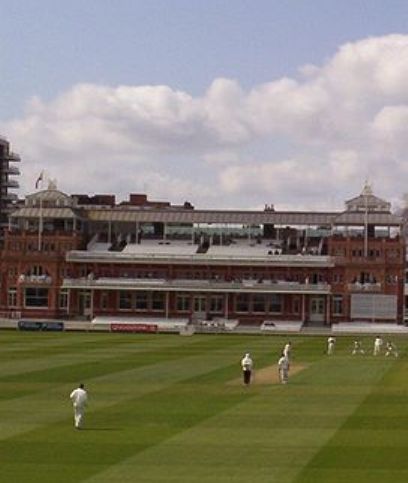
Lord's is owned by the Marylebone Cricket Club, guardians of English cricket. It is named after Thomas Lord, a bowler who set up a private ground on what is now Dorset Square in London.
Lord's moved to its current site in St John's Wood in 1814. At the time, it was a rural spot, but it is now in central London.
The building is typical of the new wave of red brick, slightly Gothic architecture that was spreading out from the outskirts of the city in all directions from the 1870s onwards.
In the late 19th century cricket was played by gentlemen and players (who were of a different social class). Cricket was a summer activity; white clothes were always worn by the teams.
 A Victorian day out at the seaside
Going to the seaside was a popular Victorian recreational summer activity. Different resorts catered to different social classes, and Broadstairs in Kent attracted more upper-middle class people.
Visitors would stay in comfortable hotels and eat and drink copiously. They could walk along the promenade or esplanade, and listen to a band play or watch a variety show.
Seaside towns built piers for mooring boats, and these became promenade venues. Some had dancing or amusement booths at which tourists were charmed into parting with their money.

 River Thames's Caversham Lock - Credit:
Chris J Wood
The towpath alongside the river would once have accomodated a horse drawing a boat, but it was also used as a thoroughfare and recreational facility.
 Blacksmith's venue for Scottish weddings - Credit:
Niki Odolphie
Eloping to Scotland and getting married against parental wishes became fashionable in the eighteenth century, when parental consent for marriage under 21 became a legal requirement in England.
Gretna Green is the first town over the border in Scotland, and it remains a popular wedding venue.