
 Snow Crystal - Credit: Geir Yngve Tro
West Greenlandic (or Kalaallisut) is the official language of Greenland (although not the only one spoken). It belongs to Eskimo-Aleut language family and is closely related to the Inuit languages of Canada. Other dialects spoken in Greenland are East Greenlandic (Tunumiisut) and Inuktun, the dialect of Thule. The majority of Greenlanders also speak Danish.
A song sung in Greenlandic:
In Him we have redemption through His blood, the forgiveness of our trespasses, according to the riches of His grace which He lavished upon us. For He has made known to us in all wisdom and insight the mystery of His will, according to His purpose which He set forth in Christ as a plan for the fullness of time, to unite all things in Him, things in heaven and things on earth
Ephesians 1:7-12


 Sisimiut - Credit: Stephane Vitry
Upernavik, Sisimiut (Holsteinsborg in Danish) and Qaanaaq (formerly Thule) are towns in western Greenland.
Upernavik, which is situated on the northwestern coast of Greenland, was founded in 1772. Although there are only around 1200 people living in the town, and another few hundred in 10 surrounding settlements, the whole municipal authority covers an area the size of Great Britain.
 Upernavik - Credit: Stephane Vitry
Sisimiut, located in central-western Greenland, is the second (after Nuuk, the capital) town in the country in terms of its population, with almost 6000 inhabitants. It has been a settlement for around 4500 years.
Qaanaaq is virtually the end of the world - the northernmost town on Earth (77°29'N 69°20'W). There are only around 600 people living there. The birthplace of Smilla, Siorapaluk, which lies in the Qaanaaq area, is the northermost inhabited settlement in the world.
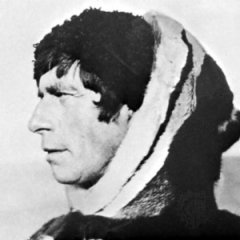
Located in a park in the Kongens Enghave district of Copenhagen, opened in 1870, Vestre Cemetery is the largest graveyard in Denmark. One of the well-known people buried there is Knud Rasmussen, polar explorer and anthropologist, who's been called "the father of Eskimology". Born in 1879 in Ilulissat, Rasmussen remains the most famous Greenlander in the world.


 Dogs chilling in Ilulissat - Credit: Gosia Rokicka
All dogs in Greenland are working sledge dogs. They live outdoors all year round, gathered in packs belonging to particular hunters and staked out on long chains so they can roam a little but won't stray. Puppies up to 4 months are allowed to roam free around villages, so they can get to know the surrounding world.
The sledge dogs are happiest in winter months as their exceptionally thick fur allows them to enjoy the weather, and they are eager to work. In summer, they rarely move as it is simply too hot for them. Most dogs have wooden kennels provided, but they sleep outside in rain and snow, using the kennels for shelter only when the sun gets too strong. When they work, they are fed before their owners. When they don't, they receive a portion of dried fish every two or three days.
 Greenland puppies - Credit: Stephane Vitry
Such treatment of dogs may seem strange to European and American visitors, but the truth is Greenland dogs are probably the happiest canines in the world. Although some hunters have replaced their sledges with snowmobiles, many still keep dogs as companions for hunting and hiking.
It is forbidden to import any other dogs to Greenland, to avoid dilution of the bloodline.

 Pages from Euclid's "Elements"
Written in Alexandria around 300 BC by Greek mathematician Euclid, the "Elements" is a collection of mathematical and geometric definitions and proofs. It is considered the earliest major mathematical work which survived to modern times and also one of the most influential textbooks of all times.
 Greenlandic kids - Credit: Gosia Rokicka
 Greenlandic girl with a sledge dog puppy - Credit: Gosia Rokicka
Rasmus Klump is a popular Danish cartoon character created in the early 1950s. The adventures of Rasmus the Bear and his friends were first published as a newspaper strip and later on as a series of books. On several occasions, the comic was also adapted into an animation, from a low-budged production in the 1960s to a TV series in 1997-2000.
 Cryolite mine in Greenland, 1940
Cryolite is a glassy, colourless and very uncommon mineral found in large quantities only in one place in the world: on the west coast of Greenland. However the deposit there ran out in 1987. Smaller quantities have been reported in Colorado, Quebec, Russia and few other places.
It is used in the production of aluminium.