An extract from the most famous line of François de Malherbe's 'Consolation à Monsieur du Périer' (1598), written upon the death of M. du Périer's daughter. The line, 'Et, rose, elle a vécu ce que vivent les roses' translates into English as 'And, a rose, she lived as roses live'. Consoliato contains the full text and English translation.
French for spearhead. Bothrops lanceolatus is a venomous pit viper endemic to Martinique, but unknown on nearly all other Caribbean islands. The related Bothrops caribaeus is found only on the island of St Lucia, and is sometimes also referred to as a fer de lance.


 St Kitts - Credit: Aaron Vos
A Caribbean Island, St Kitts has Spanish, French and British colonial history.
From the song 'Adieu Foulard, Adieu Madras', in which the singer bids farewell to the fine materials foulard (silk, or a silk and cotton blend) and madras (cotton, or a silk and cotton blend). The girl asks her mother why beautiful flowers die in a day.
Listen on Spotify: Adieu foulard, adieu madras
For a version of the song in Martinique creole with an English translation, (which lacks the line about flowers) click here.
Edwin Hill's '"Adieu Madras, Adieu Foulard": Musical Origins and the Doudou's Colonial Plaint' offers a scholarly analysis of the song.
The French use the metaphor 'la petite mort' for orgasm, which seems to be the sense in which Rochester means die here.
Reminiscent of John Donne's 'The Sun Rising':
Busy old fool, unruly Sun,
Why dost thou thus,
Through windows, and through curtains, call on us?
Must to thy motions lovers' seasons run?
Saucy pedantic wretch, go chide
Late school-boys and sour prentices,
Go tell court-huntsmen that the king will ride,
Call country ants to harvest offices;
Love, all alike, no season knows nor clime,
Nor hours, days, months, which are the rags of time.
Thy beams so reverend, and strong
Why shouldst thou think?
I could eclipse and cloud them with a wink,
But that I would not lose her sight so long.
If her eyes have not blinded thine,
Look, and to-morrow late tell me,
Whether both th' Indias of spice and mine
Be where thou left'st them, or lie here with me.
Ask for those kings whom thou saw'st yesterday,
And thou shalt hear, "All here in one bed lay."
She's all states, and all princes I;
Nothing else is;
Princes do but play us ; compared to this,
All honour's mimic, all wealth alchemy.
Thou, Sun, art half as happy as we,
In that the world's contracted thus;
Thine age asks ease, and since thy duties be
To warm the world, that's done in warming us.
Shine here to us, and thou art everywhere;
This bed thy center is, these walls thy sphere.
The French and British were at war during the early nineteenth-century, and they were constantly fighting over territory in the Caribbean. Dominica had been French, but changed hands three times between France and England in the late seventeenth century until British victory. The French had tried to reclaim Dominica as recently as 1805.
This suggests the practice of obeah, as well as relating to Jane Eyre: on their first meeting, Rochester accuses Jane of bewitching his horse.
In Victorian times, madness was widely believed to be hereditary, and females were seen to be more predisposed towards madness than men – a mother would pass her madness on to her daughter.
In Jane Eyre, a genetic predisposition towards madness is the only explanation given for Bertha's insanity. See 'Madness Within Victorian Society' for more information.
Upper class Victorian males were educated to prepare them for duties in running the largest empire ever known. It was an education that prized rationality over emotion, and taught boys that as men they would be in rational control of the situations they found themselves in.
This education seems to have damaged Rochester's emotional faculties.
Much of the rainforest interior of Dominica is what W. H. Hodge describes as a 'slippery, bright-red ferruginous clay'. The base rock suffers heavy erosion dues to the heat and humidity of the climate, and forms this clay.
See W. H. Hodge's article 'The Vegetation of Dominica' in The Geographical Review.
 coffee tree - Credit: FCRebelo
 guava tree - Credit: Nsaum75


Gifts left to appease the spirits. If the locals believe the place to be haunted, this would also explain the girl's scream and Baptiste's refusal to talk about the road.
Roads in Dominica fell into disrepair after the French left - there would have been many ghostly roads.
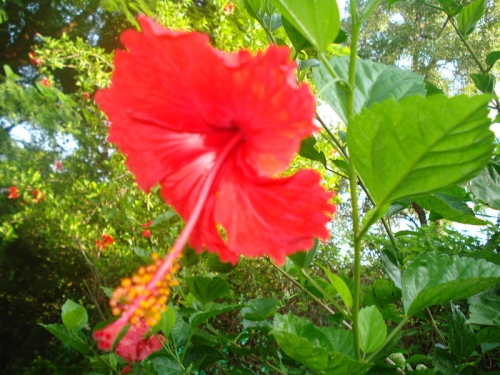 Red hibiscus - Credit: LRBurdak
Tobacco was another of the West Indies' major exports. By the nineteenth-century, much of the tobacco smoked in Britain was from the British Caribbean. In Britain and the States, white women did not smoke, as it was considered unladylike.
Kate Chopin's late nineteenth-century heroines are often depicted smoking in assertion of their freedom and unconventionality (as did the author herself). There were fewer cultural restrictions on female behaviour among the black community of the Caribbean.
Under English Law, all the personal property bought to a marriage by the wife belonged to the husband. This continued until the first Married Woman's Property Acts of 1870 and 1882.
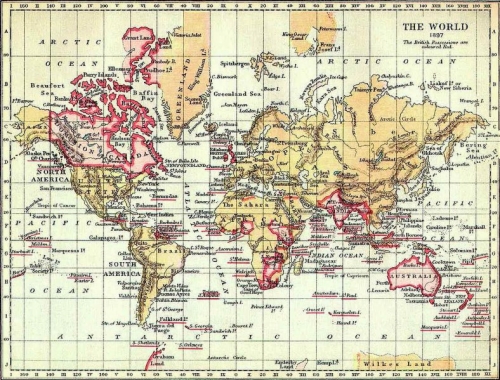
In nineteenth century school atlases, pink was used to denote the British Empire. This is an example from 1897.
That the two most important facts cited about countries were exports and imports is indicative of world relations in colonial times. In 1803 the West Indies accounted for one third of British imports and exports.

 Essex on English map - Credit: Wereon
 Chelmsford Cathedral - Credit: Qst
Essex is a county in the South East of England. Chelmsford is a 12th century market town, and the county town of Essex. The river Chelmer runs through it.
The Yorkshire and Lincolnshire Wolds are an area of low hills divided by the River Humber.
 Snowy Yorkshire Wolds at West Lutton - Credit: James F. Carter
Christophine's disbelief in England is a statement of extreme philosophical relativism worthy of sophisticated philosophers, as well as a seemingly naive dismissal.
Bertha is the name of Mr Rochester's wife in Jane Eyre.
In order to protect their family line, it was common for brides' families to insist on a settlement that would ensure that some or all of the property that the wife brings to the marriage would ultimately belong to her or her children in the case of the death or loss of the husband. For example, it could be specified that the children of the marriage would each inherit a certain amount (In Austen's Northanger Abbey, General Tilney could not completely disinherit his son Henry, as some of his inheritance is guaranteed by the marriage settlement of his mother). The wife would not necessarily have personal control over this money during the marriage.
Smelling salts release ammonia, which irritates the mucous membrane of the nose and lungs, triggering an inhalation reflex and causing the muscles that control breathing to speed up.
One reason that jewellery has historically been so important to women is that it is one of the few forms of property that women have been able to own. A wife's jewellery was, until the Married Women's Property Acts, the property of her husband, but nevertheless it often functions as financial security for women in fiction, as it undoubtedly did in real life.
The Merchant of Venice's Jessica famously steals her father's ring; one of the first acts of Daniel Deronda's heroine, Gwendoline, is to pawn a necklace when she realises that her family is destitute.
Indian women still speak of wearing their fortune (as gold) on their arms and necks.
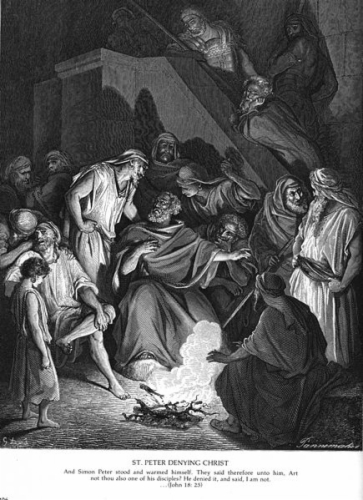
During the Last Supper, Jesus foretold that Peter would deny him three times before the cock crowed (before the cock crowed twice according to Mark 14). Faced with a hostile crowd after Jesus's arrest, Peter did as prophesied.
The cock crows three times in Wide Sargasso Sea, echoing Peter's three denials of Christ.
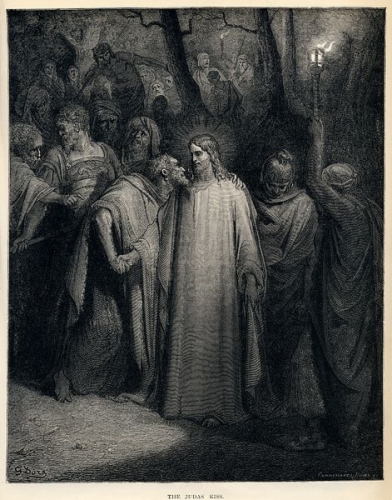
Judas betrayed Christ to the Roman Authorities for thirty pieces of silver. As Angela Smith says, 'Rochester's family sold him for thirty thousand pounds'.