This map plots the settings and references in When the Siren Calls
To start exploring, click a red pin


 Montalcino, a traditional Tuscan wine-producing village - Credit:
O.S
Castello di Capadelli, the fictional setting of When the Siren Calls, is a typical Tuscan village taken over by ambitious British property developers. The exact location of the settlement is not given, but it lies between Pisa and Florence, around 10km from San Miniato. Lucca would be to the north, and Siena to the south. The resort is perched on the ridge of a hill, providing stunning views in all directions. The Apennine mountains would be visible in the far north.
Before the arrival of Jay and his compatriots, it was a quiet village whose economy depended on agriculture – the vineyards and olive groves were its lifeblood. The arrival of the property developers to take over the sprawling villa, once seat of the Pisan Visconti family, on the edge of the village, heralds an unprecedented change for Capadelli. Jobs are created for the remaining youth – from much of rural Italy, young people have been making their way steadily townwards, towards the promise of better jobs, more money and a life less ruled by tradition – and the enotecas and osterias receive an influx of outside trade.
Capadelli is developed as a timeshare property – the British investors can buy a share of an apartment or villa which they then share with other investors, each of them allowed to use it for a certain number of days or weeks per year. The properties are large and luxurious, designed for discerning clients with no detail overlooked, from the designer toiletries in the bathrooms to the
 The Tuscan coast near Porto Santo Stefano - Credit:
Cepiccone
cooling bottles of prosecco in the fridges. Jay’s vision extends further, to a spa and tennis courts, riding school and numerous restaurants.
Although fictional, Capadelli is similar in concept and design to many other properties in Italy. The beautiful tranquility of the Tuscan hills has long been a favourite amongst English holidaymakers, and once-crumbling terracotta-roofed villas have been renovated and landscaped at their owners’ discretion. The warm Mediterranean climate, abundance of vineyards, olive groves and lemon trees, delicious traditional food and easy access to the numerous wonders of Tuscany and the rest of Italy will, no doubt, ensure that Lucca and its neighbours remain firm favourites amongst visitors for generations to come.

 Sunset over Florence - Credit:
stevehdc
Aside from Castello di Capadelli, all Tuscan towns and cities named in the novel are real. Bookmarks deal with the cities and their landmarks in more detail, but a brief overview is given here:
Florence is the capital city of Tuscany, and the region’s most populous city with around 370,000 inhabitants. Founded by the Romans, Florence flourished as one of Europe’s principal Medieval cities – an important banking and trading centre and one of the wealthiest cities of its time. In the Middle Ages it was home to the Medici family, great patrons of the arts, and is considered to be the birthplace of the Renaissance with Michelangelo and Leonardo da Vinci among the sons of the city. Florence is still famed for its fantastic artistic and cultural heritage: its museums and galleries are amongst the most famous in the world.
The ancient centre of Florence, with the Duomo at its heart, is a UNESCO World Heritage Site and plays host to millions of visitors every year. Its well-preserved Medieval architecture, attractions such as the Ponte Vecchio, Pitti Palace and Uffizi Gallery, and pervading traditions of culture make Florence one of Italy’s most-visited and best-loved cities.
 The Leaning Tower of Pisa - Credit:
Samuli Lintula
Pisa is a small city (population 88,000) on the River Arno in central Tuscany. Founded in the 5th century BC or before, Pisa is an ancient city which thrived as a maritime trading settlement due to its excellent river system and prominent position in Italy. It is one of the most famous cities in Italy due to its iconic landmark: the Leaning Tower of Pisa. This cathedral bell tower leans at an angle of 3.99 degrees due to soft foundations. Pisa is also home to numerous other historical monuments including the cathedral, palaces and around twenty churches, and is famous for being the birthplace of the physicist and astronomer Galileo Galilei.
 The red rooftops of Lucca's historic centre - Credit:
Myrabella
Lucca (population 84,300) is an ancient walled Tuscan city. Founded by the Etruscans, it became a Roman colony, a large independent city state, and finally part of Italy in 1847. Based on a Roman grid pattern, the historic city centre is most famous for its Renaissance walls, built to defend the city but later used as a pleasant promenade. Lucca also boasts numerous old churches, piazzas, palaces and museums, and is one of the most prominent and visited cities in Tuscany.
 Marrakech's Bab Agnou Gate - Credit:
Lionel Leo
Sometimes called the 'Ochre City', at the centre of Marrakech is the ancient walled city (medina) which includes Djemaa el Fna, one of the world’s busiest squares. The souk in Marrakech is the largest traditional market in Morocco and an important Berber trading centre. The city has a large international population and is much-visited by tourists from across the world.

 A panorama of the bustling square Djemaa el Fna - Credit:
Ori
La Mamounia is an hotel near the Royal Palace in Marrakech. It is housed in an ancient palace whose gardens once belonged to an 18th century prince, El Mamoun.
Tokyo is the capital city of Japan, situated on the country’s main island, Honshu. The metropolitan area has a population of 35.7 million, making it the largest metropolis in the world.
 Tokyo streets by night - Credit:
Nalilord
Tokyo is a seismicity, at risk from earthquakes. In 1923 an earthquake killed 142,000 people, one of the biggest disasters to strike the city.
Central Tokyo is a high-density urban area, with many skyscrapers and residential developments. To maximize land space, there is a concentration on access by high-speed rail, as opposed to car which necessitates more area taken up by roads – bullet trains are one of its most famous icons. The city is a major international financial and technological centre of business and, despite its traditions of culture and history, thought of as one of the most modern in the world.

 Anse Source d'Argent on the island La Digue, Seychelles - Credit:
Tobias Alt
The Seychelles is a country in the Indian Ocean to the northeast of Madagascar with a population of roughly 84,000. It consists of 115 islands which were named for the French Minister of Finance Jean Moreau de Séchelles when they fell under French control in 1756. Britain took control in 1810 and independence was granted in 1976.
The islands of the Seychelles are largely coral with a relatively humid climate; they are famous for their great natural beauty and protected species such as the giant tortoise. Tourism is one of the country’s main industries, the other being exports from the plantations of cinnamon, vanilla, sweet potatoes and coconuts.
Berkeley Square is a leafy town square in the West of London. Originally laid out by architect William Kent in the mid-18th century as a residential area, it now has only one residential property – number 48. The rest of the square’s buildings are occupied by shops, members’ clubs, offices and other businesses.
The square was named for the Berkeley family of Gloucestershire, whose town house had stood nearby. Since its inception, Berkeley Square has been highly sought after and is home to some of the costliest properties in London. The square has been immortalised in the 1940 song ‘A Nightingale Sang in Berkeley Square’, along with several films and television programmes.
Annabel’s is London's first private members’ nightclub, founded in 1963 by Mark Birley. Located at 44 Berkeley Square, the exclusive club was named for his then wife, Lady Annabel Vane-Tempest-Stewart. Clients have included Richard Nixon, Princess Anne and Frank Sinatra.
Bayswater Road is a main road in the West of London, running along the northern edge of Hyde Park. Every Sunday the Bayswater Road Artists, a collective of 250 local artists, showcase their work on the pavements and railings lining the street.
 Cobham High Street - Credit:
Colin Smith
 Savile Row tailors - Credit:
Edward
 The walls and cathedral tower of San Miniato - Credit:
Prof.Quatermass
The countryside around San Miniato is home to valuable white truffles which are harvested and celebrated every year in an annual truffle festival, held for three weeks in November.
Abetone is a village in Tuscany, around 80km from Florence. It has a population of 700 and was created as a custom post on the main road between Tuscany and Modena in 1732. The name means ‘large fir’ – the tree was cut down to allow the development of the village. Unusual for Italy, Abetone has been a popular ski resort since the early 20th century and was the birthplace of Zeno Colò, the famous Italian skier.
 Drawings of some of Gieves and Hawkes' famous customers - Credit:
Gryffindor
 Moustiers-Sainte-Marie in Upper Provence - Credit:
Nepomuk
The Golden Tulip Galilei is a real hotel on the outskirts of Pisa, very close to the international airport – exactly where Lucy, an air stewardess, would be staying.
 Aeroplanes at Gatwick Airport - Credit:
Ian Taylor
 Tuscan wheatfields - Credit:
Norbert Nagel
 The river at Bagni di Lucca - Credit:
Franztanz
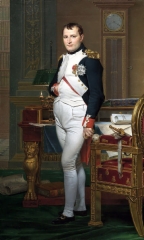
 The Ponte Vecchio - Credit:
Flavio
The Ponte Vecchio is one of Florence’s most iconic landmarks. The Medieval stone arched bridge is not the original structure to stand on the spot – it is thought that the Romans also bridged the Arno River at this, its narrowest point – but dates back to 1345. As was common at the time, small buildings were built all along both sides of the bridge, which once were shops for butchers and grocers. Unusually for a modern bridge the buildings remain, now housing expensive jewellers, leather merchants, art dealers and souvenir shops, and the bridge is one of Florence’s most-visited sights.
Unlike the rest of Florence’s bridges, the Ponte Vecchio was not destroyed by German troops at the end of World War II – it is suggested that this was on Hitler’s express orders.
The Hotel San Marco is a real three-star hotel just outside the ancient city walls of Lucca.
La Lima – also known as the Lima River or Lima Stream – is a small mountain stream which winds through the Tuscan hills above Lucca.
 The Dorchester Hotel, London - Credit:
UggBoy
Situated on Park Lane and overlooking Hyde Park, on the site previously occupied by Dorchester House, the Dorchester is today owned by the Dorchester Group and remains famous amongst London hotels.
 The skyline of Dallas - Credit:
Cordphaeton
Dallas (population 1.2 million) is the third-largest city in Texas. Founded in 1841 as a centre of the oil and cotton industries, it has always been strategically positioned close to railways and roads which traverse the United States both north-south and east-west. Today it is an important centre of commerce, with many financial, computer and medical research companies based there.
The State Fair of Texas is held yearly in Dallas and it has a thriving Arts District and successful major league sports teams. It is historically famous as the location for the assassination of American President John F. Kennedy in 1963.
 Cavadenti, in the hills of the Arno Valley near Arezzo - Credit:
Pigellino74
 The rooftops of Vinci - Credit:
lamthestig
 Sirnea in Transylvania - Credit:
Lenard denes
Transylvania is a large historical area of countryside in the centre of Romania, bounded by the Carpathian and Apuseni Mountains. Throughout history it has fallen under the reign of numerous rulers but has retained its traditions and unique characteristics. The area has a population of around 7.2 million and its economy relies on its rich mineral deposits as well as tourism.
Transylvania is famed for its beauty – mountains, castles and forests abound – and also for its associations with vampires, as the setting of Bram Stoker’s Dracula. At the same time, many areas of Transylvania are quiet, remote hamlets steeped in history and a traditional agricultural way of life.
 Lagoon Beach in Sardinia - Credit:
Robin Corps
Sardinia is an island region of Italy in the Mediterranean to the West of the country. It is the second-largest island in the Mediterranean with a mountainous topography and rocky coastline. The main town is Cagliari and the island has a population of around 1.7 million. Whilst it is Italian, Sardinia also retains its own cultural identity and strong heritage; Sardinian is widely spoken across the island. Football is very popular and the Cagliari Calcio is one of the best teams in Italy.
 Crowds in front of the Trevi Fountain in Rome - Credit:
Bodow
There is a tradition which says that if a visitor throws a coin into the Trevi Fountain they are destined to return to Rome – an estimated 3,000 euro coins are thrown into the water each day.
 Pietra di Bismantova in the Tuscan Apennines - Credit:
Paolo da Reggio
The Apennine Mountains are a chain crossing over 1000km of peninsular Italy, from the Alps in the north-west to Calabria on the coast in the south. The name is thought to derive from the Celtic ‘Penn’, meaning ‘mountain’. The highest peak is Como Grande (Big Horn) at 2,912m (9,554 ft) which has the only glacier in the range – the rest of the mountains are largely green and verdant. The Abruzzo National Park is found in the Central Apennines and the mountains are criss-crossed by a number of walking trails, including European Walking Route E1 and the Grand Italian Trail, both of which traverse the entire range.
 Michael Whyte descending the Derby bank during the British Jumping Derby in 2011 - Credit:
Owain Davies
Killarney is a town in County Kerry, south-western Ireland, with a population of just over 14,000. The Irish name, Cill Airne, means ‘church of sloes’ and it was originally founded as a monastery by St Finian the Leper. The town is home to numerous famous landmarks such as St Mary’s Cathedral, Ross Castle and Lough Leane, the lake on whose shores it rests.
Killarney has been a popular tourist destination since the mid-eighteenth century and has had several notable visitors including Queen Victoria in 1861. After Dublin, Killarney has more hotel beds than any other town or city in Ireland. The land around it is Killarney National Park which is renowned for its walking, cycling, fishing and great natural beauty.
 Ross Castle on Lough Leane - Credit:
Lis Burke
 A map of the West Country - Credit:
Kelisi
The dialect of this part of the country differs from standard English quite dramatically, with influences from the Welsh and Cornish languages. It is actually quite close to historical English from the Anglo-Saxon period. Popular culture considers the West Country accent to be connected with farmers and fishermen – the traditional economy of the area – but a recent study suggested that Britons view their fellow countrymen with a West Country accent as more trustworthy than many other accents!
 Dublin Castle - Credit:
FoekeNoppert
Dublin (population 527,000) is the capital city of Ireland. Its Irish name is Baile Átha Cliath, meaning ‘town of the hurdled ford’. It was established at the mouth of the River Liffey as a Viking settlement and has remained the economic centre of the country since its beginnings.
Dublin and its surroundings (known as ‘the Pale’) was the first area in Ireland in which English was spoken – brought by the Normans at the end of the 12th century, it is now the official spoken language. The English which is spoken in Ireland is known as Hiberno-English and features many influences of the Irish language which is also still spoken and written throughout the country.
 The rooftops of Truro with St Mary's Cathedral at the centre - Credit:
Chris Downer
Its main attractions include the Gothic-revival cathedral of St Mary, the Royal Cornwall Museum and its large number of specialty shops and markets.
 The Duomo towers over the city of Florence - Credit:
Owmn
 The decorative marble facade of the Duomo - Credit:
Jebulon
The Duomo towers over the city of Florence and is one of its iconic images and most visited sights. Until modern times it was the largest dome in the world and remains the largest brick dome ever built. The cathedral, baptistery and Campanile (bell tower) are listed as a UNESCO World Heritage Site.
 A Holiday Inn sign used by roadsides in America in the 50s and 60s - Credit:
JMG717
Croydon is a town and borough in South London which is one of the largest shopping districts in southern England, due in part to its location – many road and rail links to London from the south pass through Croydon.
 The Neo-Classical facade of the Church of San Marco - Credit:
Joanbanjo
There is also a convent attached to the church, which is now a museum, home to a library of Latin and Greek manuscripts collected by the artist and sculptor Michelozzo. The convent was home to the famous painter Fra Angelico in the 15th century.
 Harrods on Brompton Road - Credit:
Sokkk y
The shop occupies a 5-acre site which gives it over one million square feet of selling space throughout several departments. It is said that anything in the world can be bought from Harrods – even if it isn’t physically in the store, it can be ordered. The shop is most famous for luxury goods and has a Food Hall and Christmas Store which are known the world over.
Harrods also owns other businesses such as a bank, estates agent and aviation corporation. It is currently owned by Qatar Holdings.
 Cape Town, with Table Mountain in the background, as viewed from Robben Island - Credit:
Matthias Kniese
Cape Town was first mentioned by Bartholomeu Dias, a Portugese explorer, in 1486 and was developed by the Dutch East India Company as a supply station for its trading ships, making it the first permanent European settlement in South Africa. The late 19th century saw a rush of immigrants to Cape Town after the discovery of diamonds in the surrounding area, and it remains a very multicultural city.
Cape Town was home to many leaders of the anti-apartheid movement in South Africa and it was here that Nelson Mandela made his famous speech in 1990 to mark the end of his imprisonment and the segregation.
 Cape Town waterfront - Credit:
Andres Tusche
 A panorama of Piccadilly Circus: the fountain and statue are to the left, with the illuminated billboards to the centre - Credit:
David Iliff
Piccadilly Circus is in the West of London, linking Regent Street to Piccadilly. It was built in 1819 specifically for this purpose: as a road junction and public space. ‘Circus’ comes from the Latin meaning circle.
As well as Regent Street and Piccadilly, Piccadilly Circus also joins Shaftesbury Avenue, Haymarket, Coventry Street and Glasshouse Street, placing it at the centre of London’s theatre and shopping districts. It features a statue of Eros and the Shaftesbury memorial fountain, as well as neon video displays mounted on the buildings. Underneath Piccadilly Circus is its underground station; the area is a popular place for tourists and locals, and one of the busiest public spaces in London.
 Inside the market hall at Covent Garden - Credit:
David Iliff
The market hall was designed by Charles Fowler and built in 1830 in an attempt to organise what had previously been an outdoor market. The wholesale fruit, vegetable and flower market remained there until 1974 when it moved to New Covent Garden Market; the original building now houses craft stalls, shops and cafes and is a popular tourist attraction. Other landmarks in Covent Garden include the Royal Opera House, the London Transport Museum and the nearby Theatre Royal in Drury Lane. The area is now fashionable and at the heart of tourist London, known for its restaurants, shops and street performers who are a permanent feature of the central square.
 Stanfords on Long Acre - Credit:
Derek Harper
 Horses jumping Beecher's Brook during the Grand National at Aintree in 1890 - Credit:
Lordpiece Collection
Other races run at Aintree include the Topham Chase, the Fox Hunters’ Chase, the Becher Handicap Chase and the Grand Sefton Handicap Chase.
 A classic 1962 Vespa scooter - Credit:
Christian Scheja
 The royal carriages leave after the Queen's procession to the races at Royal Ascot - Credit:
Steve F
Royal Ascot is a five-day horse-racing event held at Ascot Racecourse in Berkshire every June. The meeting was founded by Queen Anne (who opened the racecourse) in 1711 and is still attended each year by members of the royal family, usually including Her Majesty the Queen. The royal family and their invitation-only guests occupy the Royal Enclosure; the remaining two enclosures are for other race-goers.
Over 300,000 visitors attend Royal Ascot – it is the best-attended race meetings in Europe. A particular highlight is the Royal Procession which marks the beginning of each day of racing. The Thursday of the week is always Ladies’ Day, on which the Gold Cup race is held and the fashionable hats worn by the lady guests are the focus of much attention.
 A nighttime view of Soi Cowboy, another of Bangkok's red light districts - Credit:
moomoobloo
Patpong, the red light district, is another of Bangkok’s most famous sights. Home to a daily night market, the area is also synonymous with Bangkok’s thriving sex industry and markets itself, unfortunately, to Western tourists and expats. Patpong features numerous go-go bars, strip clubs, sex shows, ‘massage parlours’ and other brothel-like establishments - some of them are illegal, many not.
 A glade of birch trees in Sherwood Forest - Credit:
ntollervey
Perhaps Britain’s most famous forest, Sherwood is associated with the legend of the outlaw Robin Hood, who hid out in the woods with his followers. Roughly half a million tourists visit every year and the Robin Hood Festival is held for a week every summer.
Dixie, or Dixieland, is a nickname given to the Southern United States. This is generally considered to mean the eleven southern states of Alabama, Arkansas, North Carolina, South Carolina, Florida, Georgia, Louisiana, Mississippi, Louisiana, Tennessee and Texas. The origins of the name are unclear, but are thought to be based on either the old currency issues in Louisiana, on the notes of which was written the French word ‘dix’ (meaning ‘ten’); a famously kind slave owner called Mr Dixy; or Jeremiah Dixon, a surveyor instrumental in establishing the Mason-Dixon line which divided the USA unofficially into areas of free and state slavery.
 The entrance to the Savoy Hotel - Credit:
ChrisO
The Savoy gave birth to a group of hotels which are now owned by Fairmont Hotels and Resorts. It recently underwent extensive renovations which have kept it firmly at the pinnacle of the London hotels.
The River Thames flows through southern England and is the longest river in England. Beginning at its source in Thames Head in Gloucestershire, it flows over 215 miles (346km) to the Thames Estuary where it runs into the North Sea. It is most famous for flowing through central London and has become an iconic image of the city, but it also flows through other towns and cities including Oxford, Windsor and Henley-on-Thames. Over 80 islands are dotted along its course and the river is home to an abundance of flora and fauna. It has been used by humans as a fresh water source, transport route, economic industry and leisure facility throughout the ages. The Thames is the home of competitive rowing in the United Kingdom, with over 800 clubs along its length and some of the country’s most famous races, including the Oxford-Cambridge Boat Race and the Henley Royal Regatta.
 The River Thames where it flows through Central London - Credit:
David Iliff
 The narrow streets in the historic centre of Siena - Credit:
Tanyel
Siena (population 54,000) is an historic city in the hills of Tuscany. Originally settled by the Etruscans in 900-400 BC, Siena was a strategically positioned hill fort. It still retains much of its ancient Roman and Medieval architecture such as the cathedral and town square, the Piazza del Campo, as well as numerous other churches and gardens. The town centre has been designated as a UNESCO World Heritage Site.
Siena is famed for its art, architecture, cuisine and handicrafts and is visited by hundreds of thousands of international tourists every year. One of the main attractions of the city is the Palio, a medieval bareback horse race which is run in the Piazza del Campo twice every summer.
 A view from the Campanile of Siena's rooftops - Credit:
Raymondlafourchette
 Derby Cathedral - Credit:
Russ Hamer
 The main Tudor entrance to St James's Palace - Credit:
Tony Hisgett
 Pall Mall - Credit:
Panhard
 The Palm Court, setting for afternoon tea at The Ritz - Credit:
Northmetpit
Afternoon tea at The Ritz is a world-famous event held daily in the Palm Court, a luxurious dining room decorated in a Louis XVI style.
 The Victoria Embankment illuminated by night - Credit:
Peter Trimming
One of the entrances to the Savoy Hotel leads onto Victoria Embankment.
 Narcissi in Green Park - Credit:
ChrisO
 Canada Gate, the southern entrance to Green Park - Credit:
Jordan 1972
Originally a swamp-like marsh used as a burial ground, the park was enclosed in the 16th century and made a Royal Park by Charles II. John Nash landscaped the grounds in 1820 but, unlike some of London’s other parks, it consists entirely of mature trees and narcissus flowers – a natural parkland. There are no lakes, buildings and only a scattering of monuments including the Canada Memorial, which honours the Canadian soldiers killed during the World Wars.
 Railway lines leading from Clapham Junction to central London - Credit:
mattbuck
The station is the busiest in Europe, with roughly 2,000 trains (mostly stopping) and 430,000 passengers passing through every day.
Le Caprice is an upmarket restaurant on Arlington Street, just around the corner from The Ritz, which serves ‘modern European’ cuisine.
Siberia is a large area of Northern Asia which is part of central and eastern Russia. All in all it covers around 13.1 million square kilometres, which comprises 77% of Russia’s land, but due to its harsh climate and remoteness it is home to only around 40 million people – 28% of the country’s population.
The majority of Siberia’s population lives in cities to the south, where the climate is more temperate, such as Novosibirsk and Tomsk. There are, however, many simple rural villages and tribes who live in the colder northern areas. The climate varies: southern summers can be mild and the grasslands are lush with flowers and crops, whereas in winter temperatures can plummet to -25°C. The north is considerably colder, with around one month of summer every year and recorded low temperatures of -71°C.
Siberia is rich in minerals, oil and natural gas which play a large part in the economy of the area and Russia as a whole. It is home to some of Russia’s most dramatic and famous geographical features such as the Ural and Altai Mountains and Lake Baikal, and is traversed by the Trans-Siberian railway.
 Summer at the shore of Lake Baikal - Credit:
Sansculotte
Milan (population 1.3 million) is the second largest city in Italy and the capital of the region of Lombardy. It was founded by the Insubres, a Celtic people, before being captured by the Romans and being made capital of the Western Roman Empire. Milan flourished as a city under Roman, French, Austrian and Italian rule and remains the main business and industrial centre of Italy. It is especially known for its fashion and design houses, and is much-visited for its museums, theatres and architectural gems such as the Church of Santa Maria delle Grazie, which is decorated with Leonardo da Vinci paintings. Milan Fashion Week is one of the highlights of the fashion calendar and the Milan Furniture Fair is the largest such event in the world.
 Piazza del Duomo, Milan's central square - Credit:
Dodo
 Box Hill on Surrey's North Downs - Credit:
lostajy
 The tower at Guildford Castle - Credit:
Dobowet
Divided by the North Downs, Surrey is a county in which agriculture has never been the mainstay of the economy (it was important for its cloth, paper and gunpowder industries). Its current population is around 1.1 million and it is the wealthiest county in England. Guildford is the county town and other cultural attractions include manor houses such as Loseley Park, the historic Runnymede and the Royal Horticultural Society Gardens at Wisley.
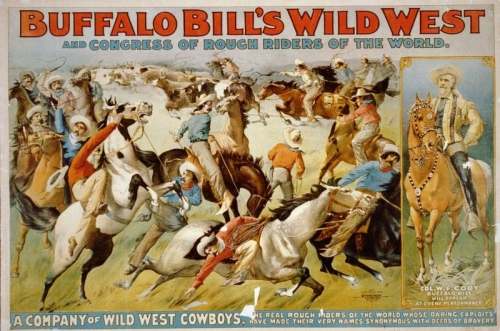
The Wild West refers to the period and location of expansion into America’s as-yet-unknown Western territories in the late nineteenth century. Up until 1800 the settled areas of America reached the Mississippi River, but expansion began in the 1800s as waves of new immigrants, scientists, explorers and settlers pushed west into new areas. One of the most famous aspects of this was the California Gold Rush, in which thousands of new settlers headed for the mines and the dream of making their fortune.
The Wild West is seen in popular culture as a lawless, hostile environment in which only the toughest and most determined characters could survive. It has also become synonymous with the myth of cowboys, the typical American settler, and the Native American Indian populations of the West. Western movies featuring the adventures of some of these romantic figures are amongst the great classics of American (and world) cinema.
 The Fortino in the main square of Forte dei Marmi - Credit:
o2ma
Forte dei Marmi is still a popular seaside resort today – the population nearly triples every summer. It takes its name (‘fort of marbles’) from its main sight, the Fortino (fortress) in the main square which, once no longer a defensive fort, was used in the 18th and 19th centuries to stock quarried marble before it was exported by sea.
 Luxury shopping on Old and New Bond Street - Credit:
Surgeonsmate
At first known for its art and antiques dealers, Bond Street has developed into the home of luxury fashion and jewellery boutiques and is one of the most expensive strips of property in the world. The street is divided into two nominal sections – Old Bond Street in the south and New Bond Street in the north – and features on a Monopoly board as one of the expensive green properties.

 One of the marbled corridors of the Uffizi Gallery - Credit:
Sailko
Currently undergoing a project to expand the exhibition space, the Uffizi is one of Florence’s most popular attractions. It houses works of art by Botticelli, Leonardo da Vinci, Titian, Michelangelo and Raphael to name but a few.
 De Wallen, Amsterdam's red light district, is illuminated by night - Credit:
Rungbachduong
The red light district is also home to several brothels, sex shops, a sex museum and ‘coffee shops’ which sell marijuana, adding to its attraction for tourists. A recent change to legislation has, however, restricted the selling of marijuana and will see many coffee shops forced to close.
 The old manor of Totten Hall, c. 1813 - Credit:
Wilkinson
 Mont des Arts, the historic city centre of Brussels, by night - Credit:
Emilio Garcia
Brussels is the capital city of Belgium and the largest urban settlement in the country, with around 1.1 million inhabitants. It is also the appointed capital of the European Union, housing the headquarters of NATO, UITP and other EU insitutions.
Brussels grew from a chapel on the River Senne which was built around 580 AD; the city was officially found in 979. The name derives from the Old Dutch ‘Broeksel’, meaning ‘home in the marsh’. As part of the Habsburg Empire, Brussels was the capital of the Low Countries until the area was annexed by France in 1795. In 1815 it became part of the Kingdom of the Netherlands, but in 1830 the Belgian revolution took place and Belgium became a separate country with Brussels its capital.
Throughout most of its history Brussels was a Dutch-speaking city with French an administrative language; the city was officially declared bilingual in 1921. During World War Two it was spared major damage despite German occupation, and since the end of the war has been a major convention centre for European politics.
London Bridge spans the River Thames in central London, between Southwark and the City. The first bridge was a timber structure built by the Romans which was replaced and improved several times until the first stone version was completed in 1209.

During medieval times, buildings stood on the bridge, whose ends were marked by Southwark Cathedral and the church of St Magnus the Martyr. The southern entrance to the bridge was the site at which the severed heads of executed traitors were displayed as a warning to the public – one of London’s most infamous sights.
 London Bridge today, with the City in the background - Credit:
David Williams
London Bridge is one of the city’s icons, regularly shown in films, and has found its way into the annals of popular history in the children’s nursery rhyme ‘London Bridge Is Falling Down’ due to its regular collapses and replacements. At its foot are The London Tombs/The London Bridge Experience, a popular tourist attraction which shows visitors a tour through London’s darker history.
 The clock tower of Big Ben at the Palace of Westminster - Credit:
David Iliff
The bell in Westminster’s clock tower is known as Big Ben – a name which extends to the clock face – and is a London landmark and British icon. It is the largest four-faced chiming clock in the world and has stood at the north end of the Palace of Westminster since 1859.

Named in honour of Sir Benjamin Hall, the MP and civil engineer responsible for its installation, the 13.5 ton bell has been cracked since 1859 when the striking hammer damaged it – despite this, the bell continues to chime, albeit with a slight twang. Four other bells housed in the belfry play the Westminster Quarters every fifteen minutes.
In June 2012, the bell tower was renamed the Elizabeth Tower in honour of Queen Elizabeth’s Diamond Jubilee. Although not open to the public, it is possible to arrange a tour of the tower to see Big Ben through an MP.